
Article by Nicole Naylor
Our local community boasts fresh, local produce and access to farmers’ markets, farmstands, and CSA boxes. From the abundant tomatoes of the summer to the crisp apples of the fall, the community benefits and thrives from this Farm-to-Fork environment.
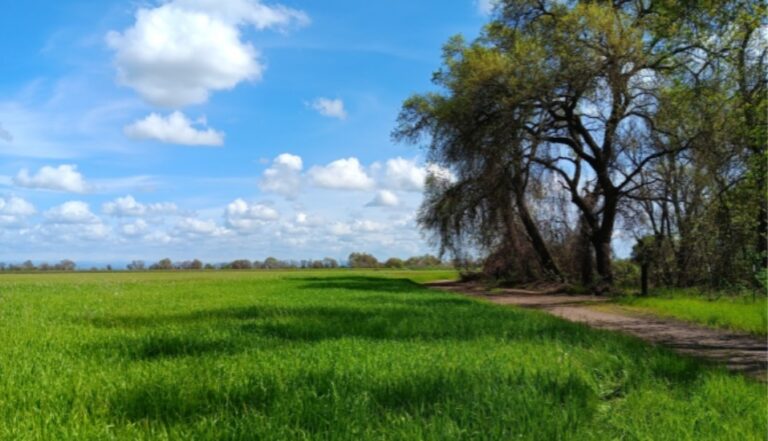
However, as you move to the edges of Sacramento, you may see the sprawling urban landscape creeping into those very regions that support our community. Fortunately, this past year serves as a reminder that protecting farmland is at the forefront of people’s minds, though it doesn’t stop here.
The Farm-to-Fork Capital just scored a huge win to protect agricultural land in the region, with local land trusts securing 10 grant awards totalling over $17.5 million that will permanently preserve over 5,000 acres of ranching and farmland from development. The grants came from the California Strategic Growth Council’s Sustainable Agricultural Lands Conservation (SALC) program, which is part of California Climate Investments, a statewide initiative that puts billions of Cap-and-Invest (also known as Cap-and-Trade) dollars to work reducing greenhouse gas emissions, strengthening the economy, and improving public health and the environment – particularly in disadvantaged communities. SALC is one of California’s most effective climate strategies. According to the California Climate Investments Report, in 2024, the program was awarded $414 million and achieved a reduction of 16,742 metric tons of CO₂ emissions statewide through permanent agricultural land conservation.
Agriculture contributes $12 billion per year to the local economy and is key to our identity, but local land use decisions have eroded this value by urbanizing 237,000 acres of agricultural land from 1988 to 2018 according to Valley Vision, in just 30 years, converting an area four times the size of the City of Sacramento!
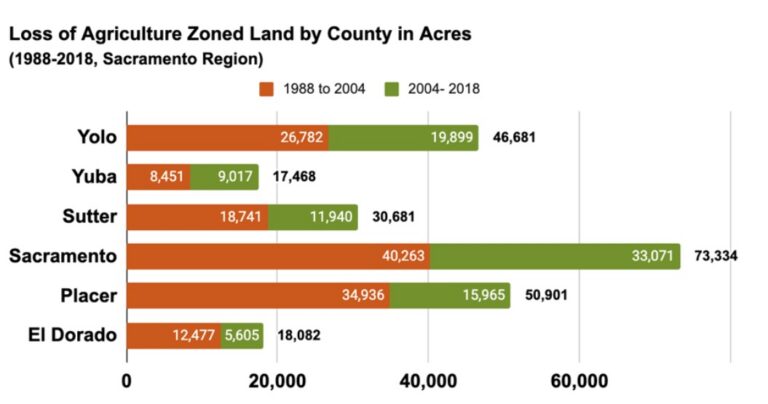
Department of Conservation, Farmland Mapping and Monitoring Program
Despite these alarming trends, there is still cause for hope. Local land trusts and conservation groups are calling for the creation of a Greenprint Plan that will protect our natural resources and accompany the SACOG Blueprint, which guides transportation infrastructure and urban growth. Our region is one of the few in California that lacks comprehensive open space and habitat planning that can benefit residents with nature access and recreation while protecting agriculture.
Hope continues, with local wins for farmers, access to open space, economic benefits, and climate goals through programs that support farmland conservation. The Placer Conservation Authority recently enrolled approximately 4,245 acres of prime farmland and open space under a conservation easement, securing Raccoon Creek Ranch as the largest remaining concentration of prime farmland in Placer County. Under this easement, the land must remain in agricultural production, ensuring it cannot be developed. Another major victory came when a $420,000 grant was awarded to purchase a 79-acre conservation easement protecting farmland in Yolo County. In El Dorado, the final stages of their 4,182-acre El Dorado Ranch conservation project have started. This land will allow for both wildlife and livestock to thrive, continuing to keep it as a working agricultural landscape while ensuring its future protection.
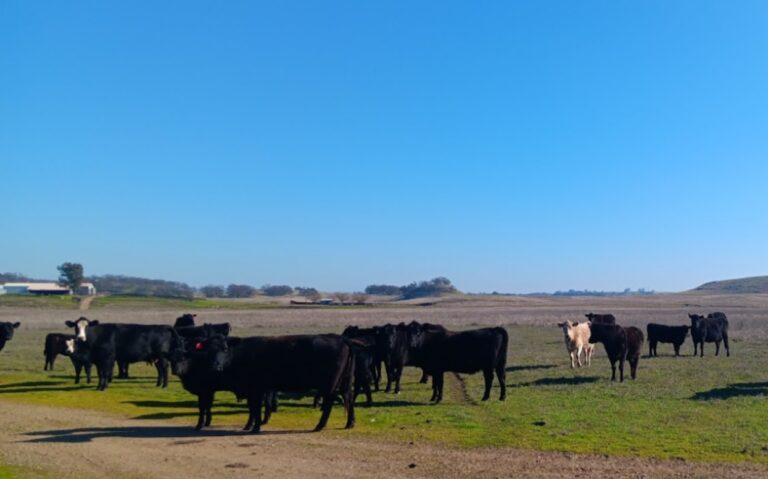
Cattle at Tudesko Ranch Preserve (Sacramento Valley Conservency)
Farmers struggle with challenging market conditions, and we applaud the owners who choose to pursue conservation options that they can invest in their farming operation or use to diversify their income streams. Farmers do have options, but these tools must be supported, expanded, adequately funded, and re-examined to meet the realities they face today. Conservation easements provide significant one-time income for the development rights to farmland. Programs like the Williamson Act, which keeps farmland in production through property tax incentives; BirdReturns, run by The Nature Conservancy, Audubon California, and Point Blue Conservation Science, which pays Sacramento Valley rice farmers to create seasonal habitat for birds; and the California Farmland Conservancy Program, which provides grants for agricultural conservation easements, all play essential roles in sustaining working lands. Ultimately, one of the most important actions residents can take is to support local farmers through Farm-to-Fork initiatives, strengthening both the regional economy and our agricultural future.
How can you help support our local farmland? Local land trusts are leading the effort, and they have regular events and volunteer efforts you can help with. Find them at the Sacramento Valley Power in Nature page, where you can also sign up to help the regional effort to create a Greenprint. And don’t forget to enjoy our local successes through getting your food from the farmers’ market, sign up for a CSA box, eat out at restaurants that source locally, or stop by your closest farmstand!
###
Nicole Naylor is a graduate student in Environmental Policy and Management at the University of California, Davis, focusing on conservation management and environmental data science. They hold a biology degree from the University of Alabama at Birmingham and work with the California Department of Forestry and Fire Protection (CAL FIRE) as an assistant to the Rangeland Management Advisory Committee. Their work and interests center on land management, conservation, and the relationship between people and nature.
Contact Information: nnaylor@ucdavis.edu ; linkedin.com/in/niconaylor